What is Tea Ceremony?
Key Takeaways
- More Than Drinking Tea: The Japanese tea ceremony (Chanoyu or Chado) is a transformative cultural ritual blending mindfulness, architecture, seasonal art, and hospitality.
- Core Philosophy: Built upon four timeless Zen principles—Harmony (Wa), Respect (Kei), Purity (Sei), and Tranquility (Jaku)—designed to cultivate inner peace.
- Ichigo Ichie Spirit: Every ceremony honors the concept of "one time, one meeting," recognizing that each gathering is a unique, unrepeatable moment in a lifetime.
At its most fundamental level, the Japanese Tea Ceremony—traditionally known as Cha-no-yu (茶の湯), meaning "hot water for tea," or Chado (茶道), "the way of tea"—is a formalized cultural ritual where matcha (powdered green tea) is prepared and served to guests with deep mindfulness, seasonal appreciation, and refined hospitality (omotenashi).
While it may appear to be a simple act of drinking tea, Cha-no-yu is a comprehensive art form integrating architecture, garden design, historic ceramics, flower arrangement, and Zen philosophy into a single, meditative moment.
The Spiritual Roots: Sen no Rikyu and Wa-Kei-Sei-Jaku
The modern philosophy of tea was codified in the 16th century by the legendary tea master Sen no Rikyu (1522–1591). Rikyu championed the spirit of Wabi-cha—finding profound spiritual beauty in simple, unadorned, and rustic surroundings.
Rikyu established the four famous guiding principles of Chado, known as Wa, Kei, Sei, Jaku (和敬清寂):
Wa (和 - Harmony): Harmony with nature, the seasons, and fellow guests.
Kei (敬 - Respect): Mutual respect for all people and tea utensils.
Sei (清 - Purity): Cleansing physical clutter and the mind before entering the tea room.
Jaku (寂 - Tranquility): Achieving serene stillness through mindful practice.
While these four principles remain the cornerstone of traditional tea schools like Urasenke, the evolution of tea did not end with rustic simplicity.
The Samurai Lineage: Understanding Kobori Enshu-ryu (Buke-Sado)
The landscape of Japanese tea culture is vast, yet true Samurai Tea Ceremony remains an exceptional rarity. The Kobori Enshu-ryu lineage preserves Buke-sado, a refined ritual defined by warrior dignity, aristocratic grace, and spatial mindfulness.
Founded during the early Edo period by Lord Kobori Enshu (1579–1647)—a master landscape architect, castle designer, and tea magistrate to the Tokugawa Shogunate—this lineage was developed specifically for Japan's elite warrior class.
For samurai lords, the tea room served as a sacred space of neutrality, strategic composure, and quiet dignity. The physical movements in Buke-sado reflect the precise posture, spatial awareness, and unspoken respect practiced by samurai leaders.
The Aesthetic Philosophy of Kirei-Sabi
To bridge the gap between traditional restraint and warrior prestige, Lord Kobori Enshu pioneered a distinctive aesthetic philosophy known as Kirei-sabi (綺麗さび).
| Aesthetic Element | Translation | Essence in the Tea Room |
|---|---|---|
| Kirei (綺麗) | Grace, Elegance & Clarity | Bright spatial harmony, refined artistic perfection, and dignified presentation fitting for samurai hospitality. |
| Sabi (寂) | Quiet Tranquility & Depth | Spiritual restraint, patina, and profound reverence for natural imperfection and aging. |
In a Kirei-sabi tea setting, delicate artisan ceramics, carefully selected seasonal hanging scrolls (kakejiku), and pure charcoal water boiling create an environment that feels elevated, bright, and deeply meditative.
What Happens During an Authentic Tea Ceremony?
A complete, traditional tea session unfolds through a deliberate sequence of sensory steps:
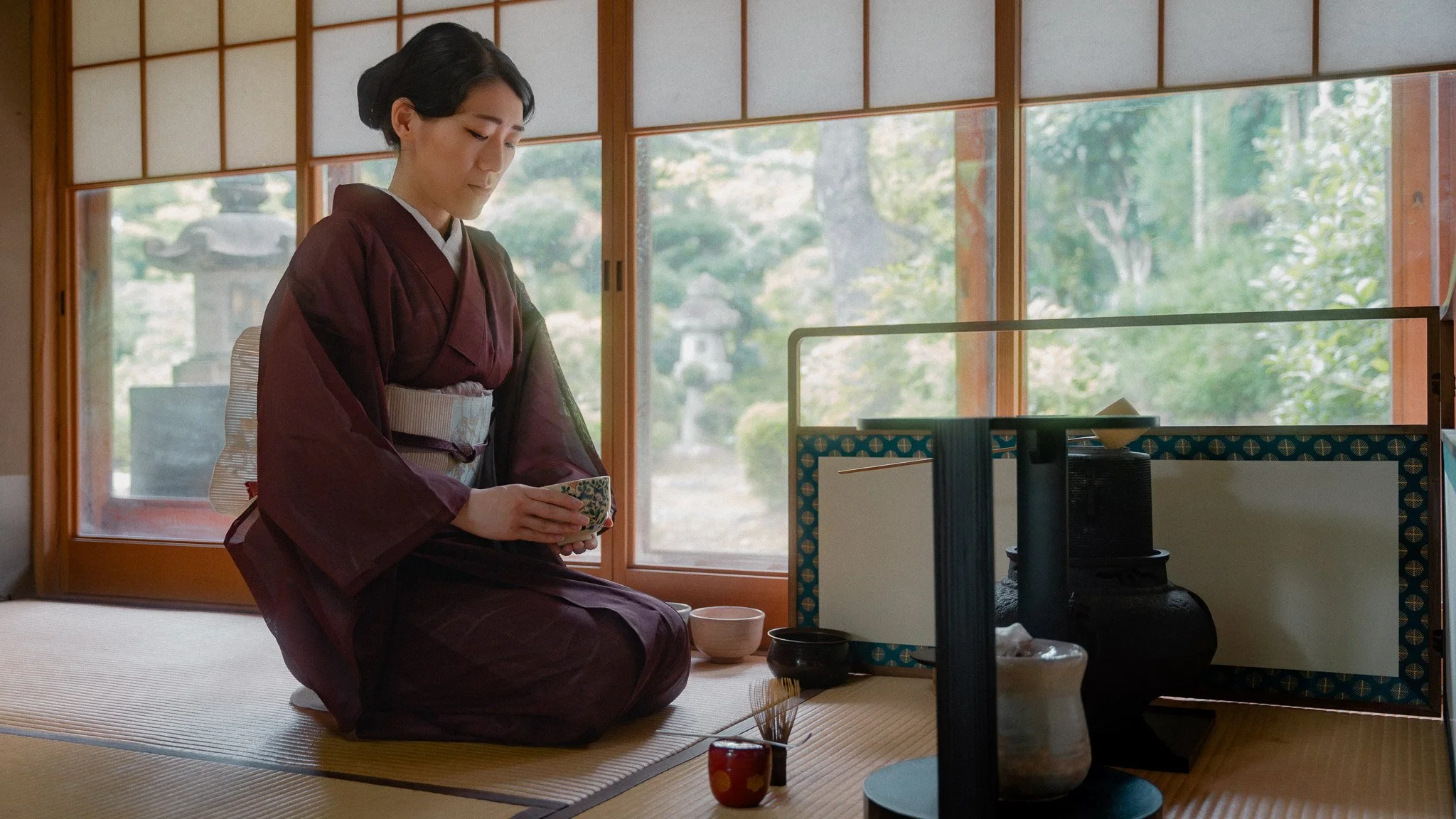
Entering the Sanctuary: Guests step onto natural tatami mats, leaving behind shoes, jewelry, and daily distractions.
Purification & Incense: The host prepares boiling water over traditional wooden charcoal (furo or ro), releasing subtle seasonal incense throughout the room.
Seasonal Wagashi Sweets: Guests savor a handcrafted seasonal Japanese sweet (wagashi) designed to complement and balance the rich, bitter notes of high-grade matcha.
The Whisking Ritual (Temae): The tea master performs precise, flowing movements to whisk pure matcha into a velvety foam using a bamboo whisk (chasen).
Shared Mindfulness: Guests receive the tea bowl (chawan), admire its craftsmanship and orientation, and enjoy the tea in quiet appreciation.
Frequently Asked Questions
Q. What is the main purpose of a Japanese tea ceremony?
A. The primary purpose of Cha-no-yu is to foster inner peace, presence, and mutual respect between host and guest. It serves as an active meditation that celebrates the fleeting beauty of the present moment (Ichigo Ichie).
Q. What is the difference between a tourist tea ceremony and an authentic experience?
A. Generic tourist group ceremonies often host large groups with pre-whisked tea, artificial setups, or electric water heaters. An authentic private session uses pure charcoal water boiling, historic school lineages (such as Kobori Enshu-ryu), individual personal guidance, and handcrafted artisan sweets.
Q. Do I need to sit in the traditional seiza position?
A. While seiza (kneeling on knees) is traditional, guests participating in private experiences can utilize floor cushions or low seating to ensure complete physical comfort throughout the ritual. Read article for more details : Navigating Posture and Comfort in a Japanese Tea Ceremony
Experience Private, Authentic Samurai Tea Culture at Towa Kyoto
True understanding of Cha-no-yu extends beyond reading history—it must be experienced with the senses: the gentle murmur of charcoal-boiled water, the aroma of fresh matcha, and the peaceful sanctuary of a private tea house in Kyoto.
At Towa Kyoto, we offer exclusive, private Samurai Tea Ceremony sessions rooted in the authentic Kobori Enshu-ryu lineage. Led by tea master Akane, each private gathering provides personalized, unhurried instruction in English and Spanish.
Escape tourist crowds and step into the refined world of Kirei-sabi.
Reserve Your Private Gathering
To preserve an intimate, tranquil, and uncompromisingly high standard of hospitality, daily reservations at Towa Kyoto are strictly limited.
