Private Tea Ceremony in Kyoto
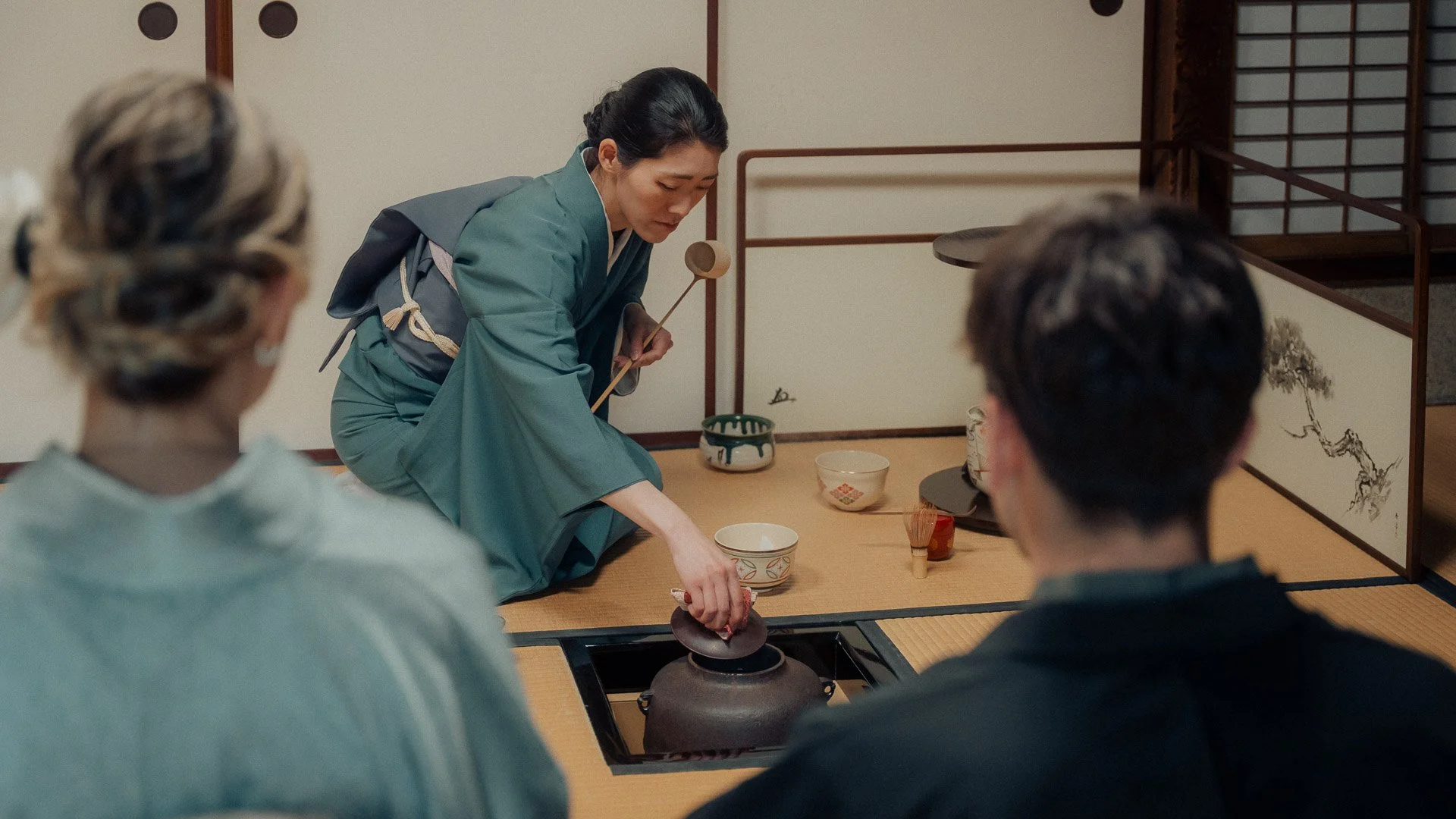
At Towa, our traditional tea ceremony is dedicated to the formal aesthetics of this discipline. During the private session, you will witness the preparation of matcha inside a tea house in Kyoto.
Embracing the true, authentic spirit of Chanoyu, we boil our water over traditional charcoal rather than standard electric kettles, bringing out a mellow flavor and a sensory warmth unique to the classic ritual.
Accompanied at all times by an interpreter guide, you will learn the classical etiquette, the handling of the utensils, and the tasting of seasonal Japanese sweets (wagashi). A space designed to appreciate the silence, the architecture, and the attention to detail in complete tranquility.
90 minutes
Completely Private
Spanish & English-speaking guide
Located 5 minutes from Ninnaji Temple
The Art & The Host
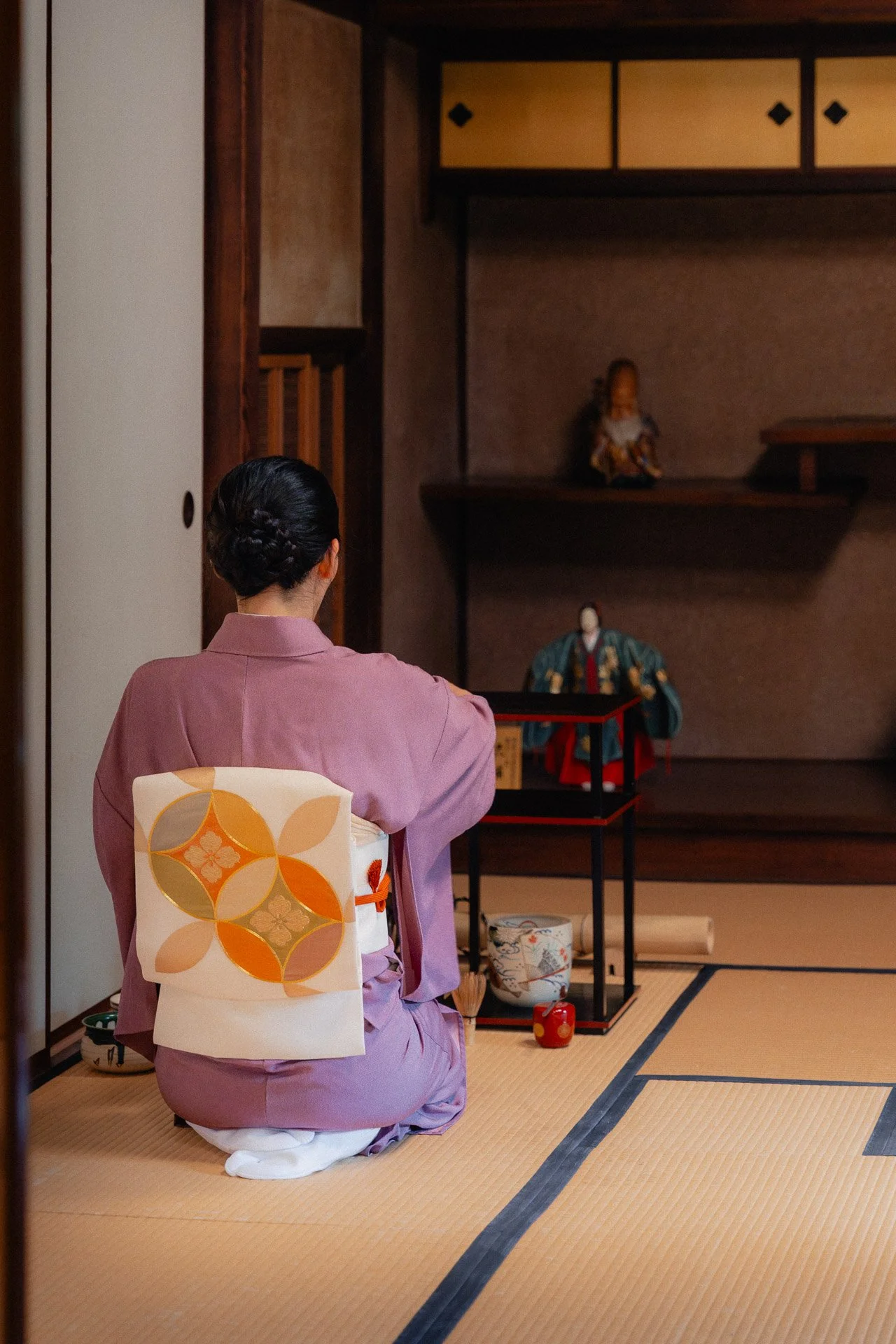
Buke Sado is the tea ceremony etiquette developed by the samurai class. It is a formal discipline, characterized by precise movements, austerity in gesture, and a strict respect for the space and the utensils.
At Towa, the ceremony is hosted by tea instructor Akane, who follows the lineage of the historic Kobori Enshu school. This school is renowned for establishing the concept of kirei-sabi: an aesthetic centered on elegance, sophistication, and an appreciation for refined details.
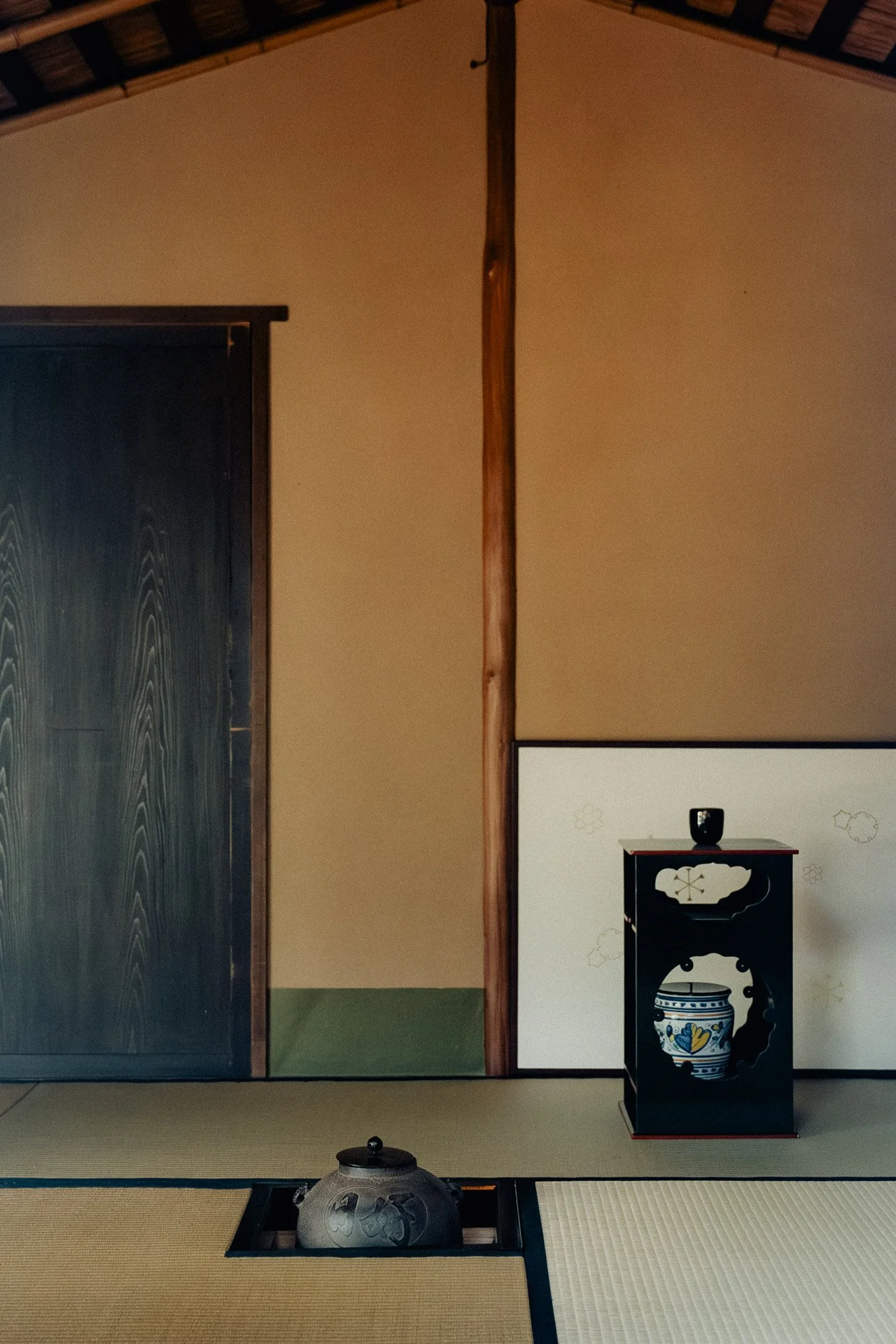
This philosophy governs the preparation of the tokonoma (the main alcove of the tea room). Its decoration changes with the seasons, featuring calligraphy, flowers, and objects carefully selected by the host to create the appropriate atmosphere and welcome the guests.
Your Journey
1. Arrival and introduction: The interpreter guide will welcome you to explain the structure of the session and the basic fundamentals of the etiquette before beginning.
2. Entering the tea room: Upon entering the space, the first step is a respectful bow to the tokonoma, a moment dedicated to appreciating the seasonal arrangements prepared by the host.
3. Preparation and traditional sweets: While the preparation of the matcha is executed, wagashi (Japanese sweets) are served. Classical etiquette recommends that they should be finished entirely before drinking the tea.
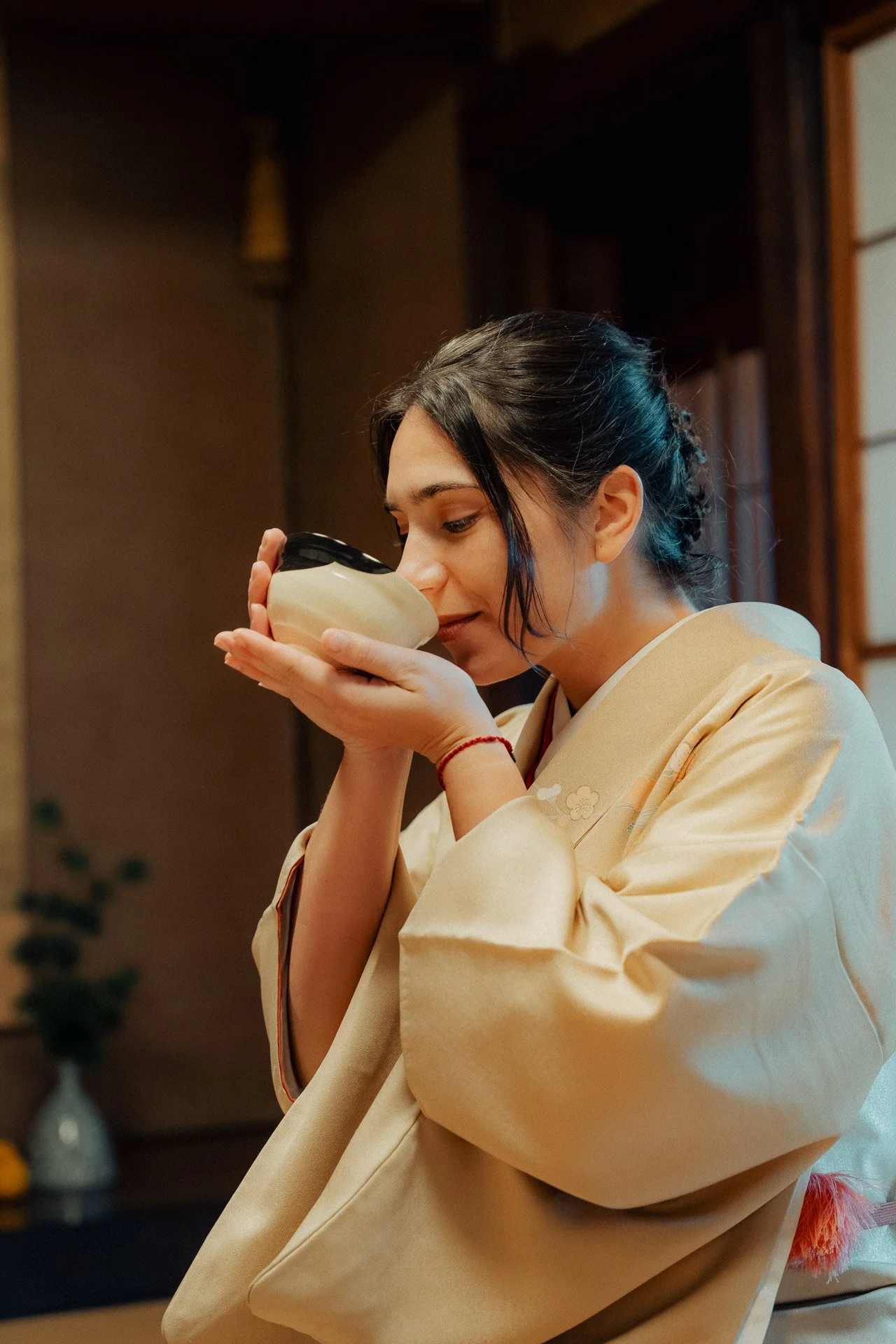
4. Tasting the matcha: The bowl is presented, allowing you to enjoy the ceremonial matcha in complete tranquility.
5. Visual documentation (Optional): Once the ceremony has concluded, time will be dedicated to conducting the photoshoot or video session, if you have included this service in your reservation.
Etiquette & Details
Location: We are located a 5-minute walk from the historic Ninnaji Temple in Kyoto
Punctuality: We kindly ask that you arrive 5 to 10 minutes prior to your scheduled time, as sessions start promptly to maintain the peaceful atmosphere.
Attire: Traditional tea rooms are entered without shoes. We kindly ask guests to wear clean white socks on the tatami mats, and recommend comfortable clothing that covers the knees.
Accessories: To preserve the historic and delicate tea bowls, please remove rings, watches, and large bracelets prior to the ceremony.
Fragrances: We ask that you refrain from wearing strong perfumes or colognes, allowing the subtle, natural aromas of the matcha and incense to be fully appreciated.
Ceremonies at Towa are conducted strictly by advance reservation to ensure the availability of our tea houses in Kyoto and the precise preparation of the space and seasonal details.
Please consult our calendar to confirm dates and, if desired, add our professional visual documentation service.