What Kind of Sweets Are Used for the Tea Ceremony?
Key Takeaways
- Two Core Categories: Tea ceremony sweets are divided into Omogashi (moist fresh confections served with thick tea) and Higashi (dry sugar/rice sweets served with thin tea).
- Naturally Vegan & Plant-Based: Traditional wagashi are made entirely from plant-based ingredients like sweetened azuki red bean paste, rice flour, agar (kanten), and sugar—containing zero dairy, eggs, or gelatin.
- Palate Harmonization: Confections are enjoyed completely before sipping matcha; their refined sweetness coats the mouth to perfectly balance and elevate the tea’s natural umami.
In a Japanese tea ceremony (Chanoyu), tea is never served alone. Before receiving a bowl of whisked ceremonial matcha, guests are presented with traditional seasonal confections known as Wagashi (和菓子).
Far more than a simple treat, wagashi play an essential culinary and artistic role in the ceremony: their sweetness coats the palate to balance the natural bitterness of high-grade matcha, while their visual design reflects the subtle beauty of the current season.
Are Japanese Tea Ceremony Sweets Vegan?
Yes. One of the unique aspects of traditional Japanese tea ceremony confections (wagashi) is that they are naturally 100% plant-based and vegan-friendly. Crafted using traditional ingredients like azuki red bean paste, rice flour, agar (kanten), and sugar, these sweets contain no dairy, eggs, or gelatin, making the tea ceremony a completely vegan-friendly cultural experience in Kyoto.
Whether plant-based or traditionally crafted, these confections are divided into two distinct styles depending on the type of tea served.
The Two Main Types of Tea Ceremony Sweets
Tea ceremony sweets are broadly categorized by their moisture content and the style of tea gathering being held.
1. Namagashi / Omogashi (Fresh, Soft Confections)
When served: Served during formal tea gatherings (Chaji) and thick tea (Koicha) ceremonies.
Characteristics: Soft, moist confections made primarily from sweetened white bean paste (shiro-an), azuki bean paste, rice flour, and agar.
Artistic Meaning: Master confectioners sculpt namagashi into edible works of art reflecting nature—such as blooming cherry blossoms in spring, maple leaves in autumn, or dew-kissed hydrangeas in early summer.
2. Higashi (Dry Confections)
When served: Typically served with thin tea (Usucha) or during more casual tea gatherings.
Characteristics: Fine, dry sweets with low moisture content made from premium Japanese refined sugar (Wasanbon) and rice flour.
Artistic Meaning: Pressed into intricate wooden molds, higashi melt smoothly on the tongue and are shaped like seasonal motifs such as pine needles, snowflakes, or stream water.
Why You Eat the Sweet Before Drinking the Tea
First-time guests often assume they should take a bite of the sweet and a sip of tea together. However, traditional tea etiquette dictates that you finish the sweet completely before taking your first sip of matcha.
The natural sugars in the wagashi coat your taste buds.
When the warm, rich matcha hits your palate immediately after, the contrast neutralizes astringency and brings out the deep umami notes of the tea.
To learn more about the scientific and culinary balance between matcha bitterness and wagashi sweetness, read our guide on Why Eat Wagashi Before Matcha?.
The Seasonal Artistry of Kyoto Confections
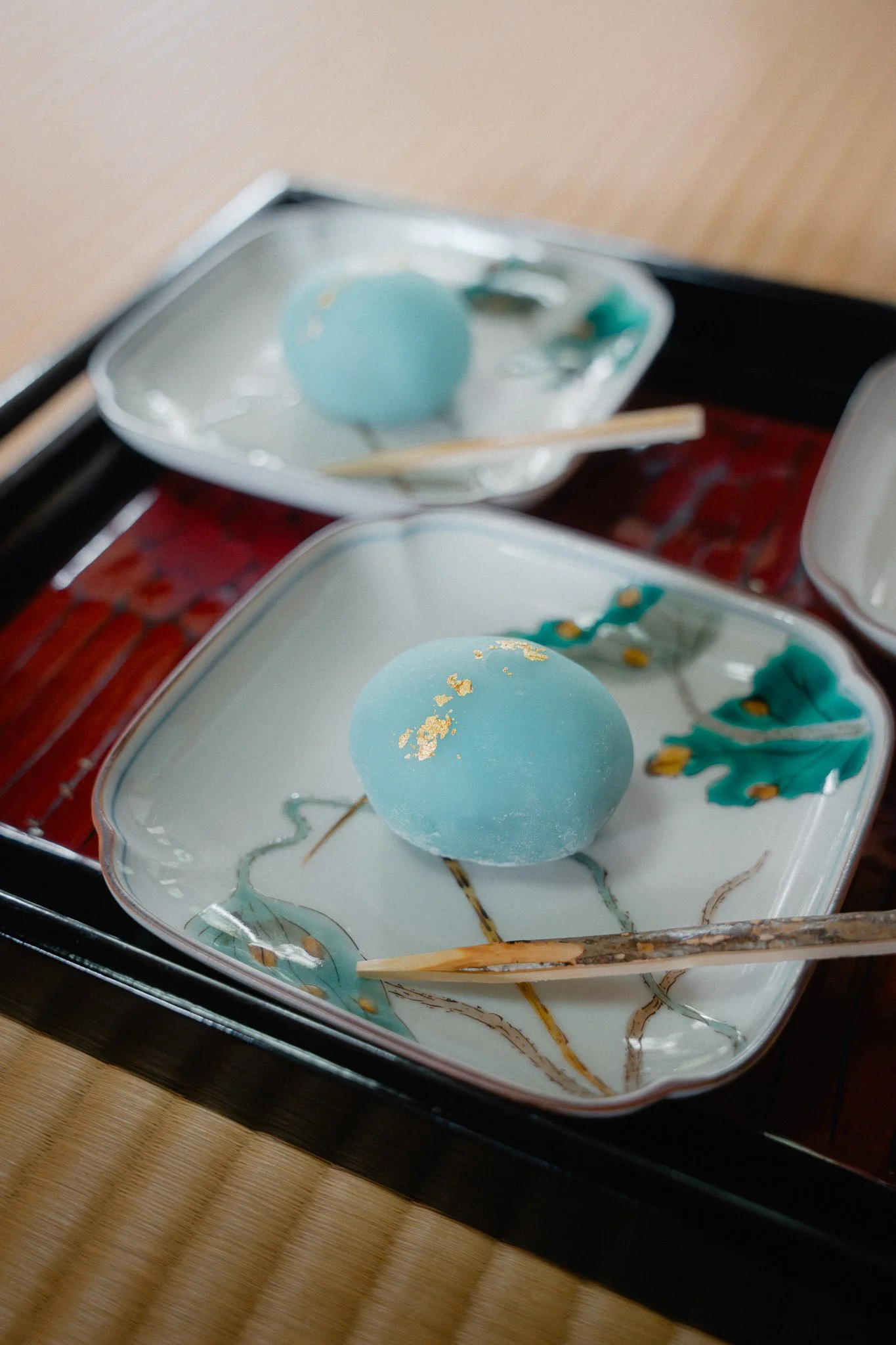
In Kyoto, the cultural capital of wagashi, confectioners rarely use artificial motifs. A sweet served in mid-April will differ subtly from one served in late April, reflecting precise micro-seasons.
At Towa Kyoto, we select fresh, artisanal seasonal confections to pair with our high-grade matcha, allowing guests to experience the complete harmony of taste, season, and tradition during their private session.
